
After a sunny but dry and cold April, followed a very wet May and June, the sun has finally returned, and July is looking to get hot, so it’s time to think about watering.
However, this is also the time when precious water can be wasted, and it’s also a heavy and time-consuming job, so how can we be frugal, whilst still maintaining the health of our plants?
Here’s our top watering tips for summer:
Containers and hanging baskets
- Water first thing in the morning, or early evening, to avoid evaporation robbing most of the water you apply.
- Put saucers/trays under pots to catch flow-through.
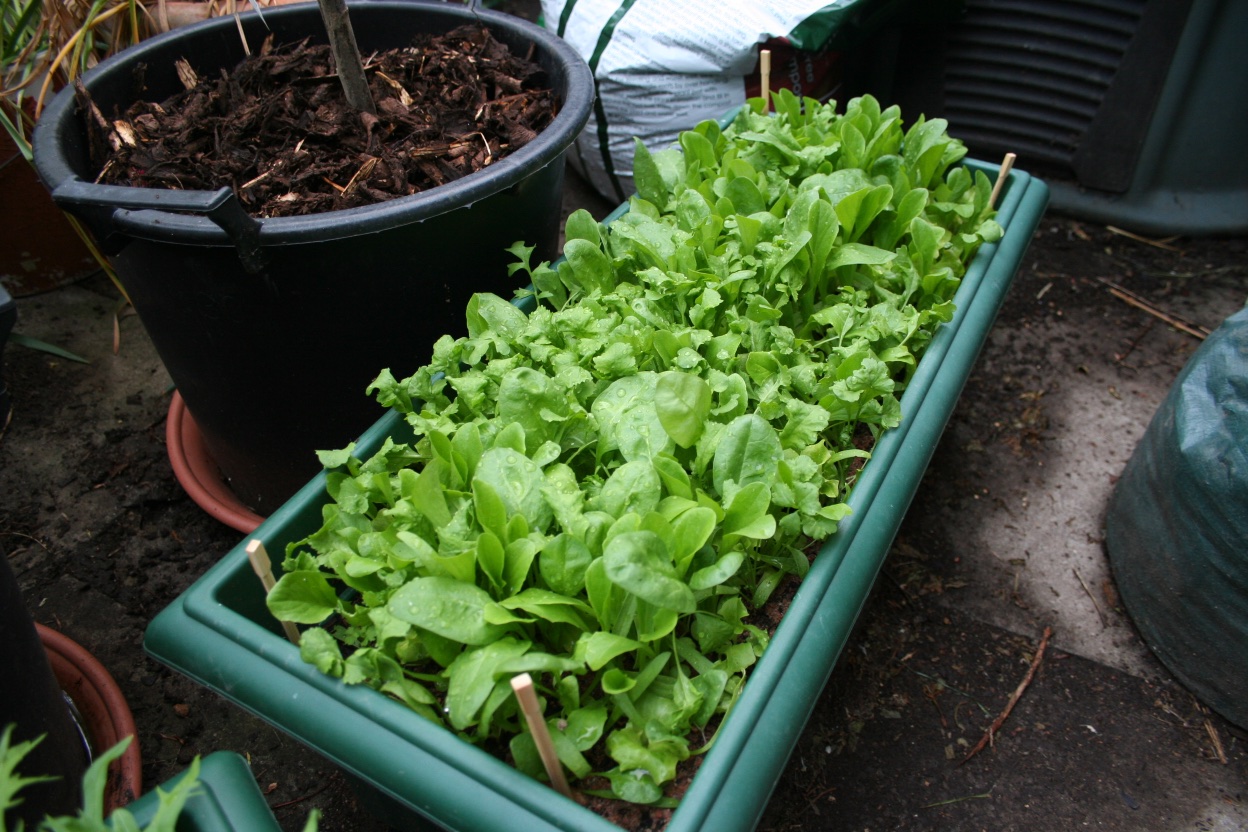
- Lift a container, or one end of a trough, and the weight will tell you if it has dried out; get used to how heavy it normally feels.
- Don’t water if the surface is still wet from before, or there’s still water in the saucer.
- Get an inexpensive soil moisture meter, and test containers before watering; for most plants, aim for moist, rather than wet or dry!
- If it’s breezy containers and hanging baskets dry out much quicker, even when it’s not particularly warm; keep a look out for sad-looking plants.
- Take down and soak hanging baskets in a bucket or bowl for a few minutes rather than watering in situ, as most of the water will drain through otherwise. Be careful, they will be much heavier when you put them back.
- On very hot days, move any struggling plants, even sun-loving ones, into the shade, or provide shade for them; also do this if you are going away and expecting it to be hot.
- Use ceramic cones on soda bottles to provide constant moisture to thirsty plants, or if you are going away; these work much better than the similar dripper kind. Think about putting water-retaining gel or discs into the pots next year if you’ve not previously done so.
- A mains-connected dripper system with a programmable timer is good too, just be sure the connections are sound and not leaking, and check you are not over watering. Set them to run early in the day.
In the ground
- Don’t water established perennials, or trees, unless they look like they are in peril. Healthy established perennials have good root systems and should be able to find water in normal soil. If you do need to water them, they will need several buckets worth to make any difference. It’s better to mulch them when the soil is still wet.
- Don’t water grass. It’s such a waste. The grass will look brown, that’s natural. Protect it by leaving it longer in the summer, rather than using the sprinkler.
- It’s not a great time of year for establishing new plants; if you do need to plant something, dig in lots of organic material first, and really soak the planting hole before planting, and let the roots follow it down. Covering up with drier soil or mulch will help keep that moisture where it helps.
- As the soil is still moist just under the surface, get some mulch on! Any organic material will work (e.g. grass clippings, partially degraded compost, manure or straw), and this will also add water-retaining humus to your soil for next year.
- When you do water, water well, don’t just dribble! A good soaking will last a few days and do much more good than a light sprinkling every day. If the soil dries out, it’s really surprising quite how much water is needed to get anything other than the surface wet.
Finally
If you didn’t connect that (extra?) water butt this year, or apply compost to your soil, make a note to do for the next growing season.
And if you used a peat-based compost in your pots this year, please make it the last year; peat-free alternatives are so much better now, retain moisture longer, and are easier to wet when they do dry out; keep peat in the precious habitats where it belongs!
Enjoy!
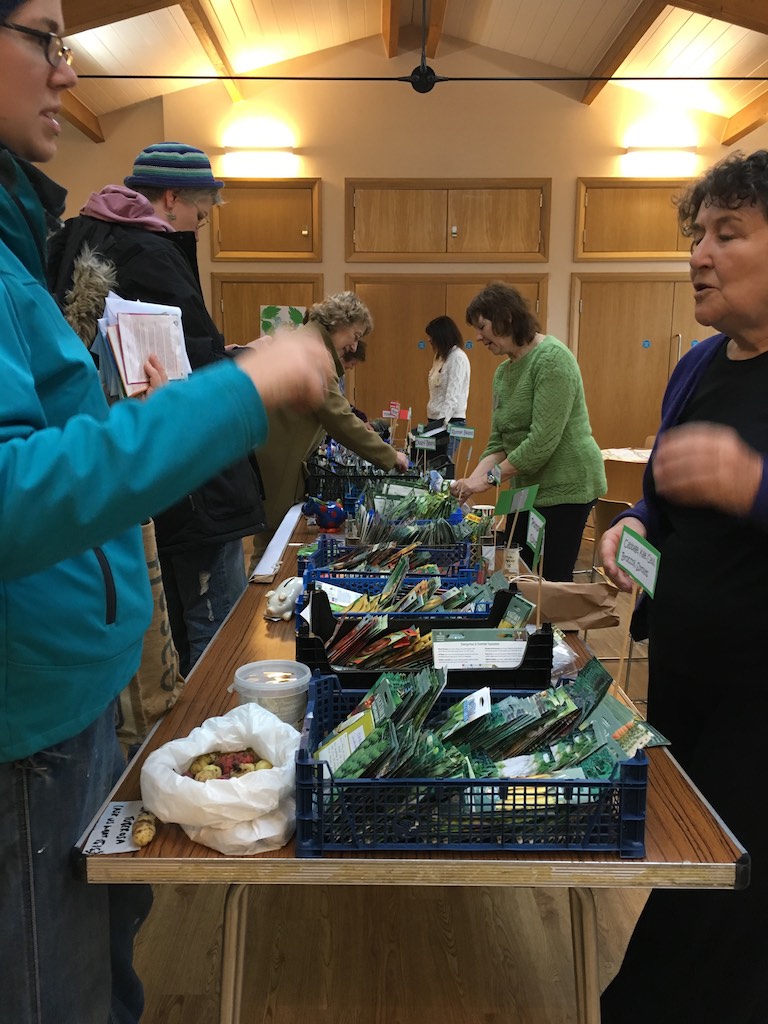 Our Seedy Saturday (seed swap) in February was a great success, with a great many seeds on offer, and our subsequent Seedling Swap in May went well too, although the cold start to the Spring nobbled our most tender plants and we were practically bean and squash-less, with the notable exception of Runner Beans!
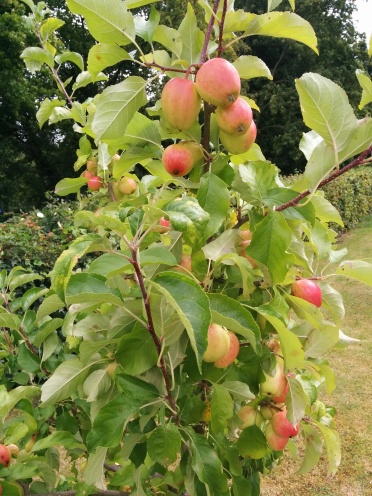
 Other plots continued to be wonderful, with the Station Plot getting a new growing barrel and a bird table, and sporting a very unusual container in the form of an old Spanish guitar; the Westbrook plot absorbed a great deal of hard-work fighting invasive tree roots, before hopefully finding a solution which will vastly improve its yield, and our little orchard at Jubilee Fields produced its very first apples. We got some great new ALFI signs for all the plots and planters, and a Alton Men’s Shed made us a couple of fantastic notice boards.
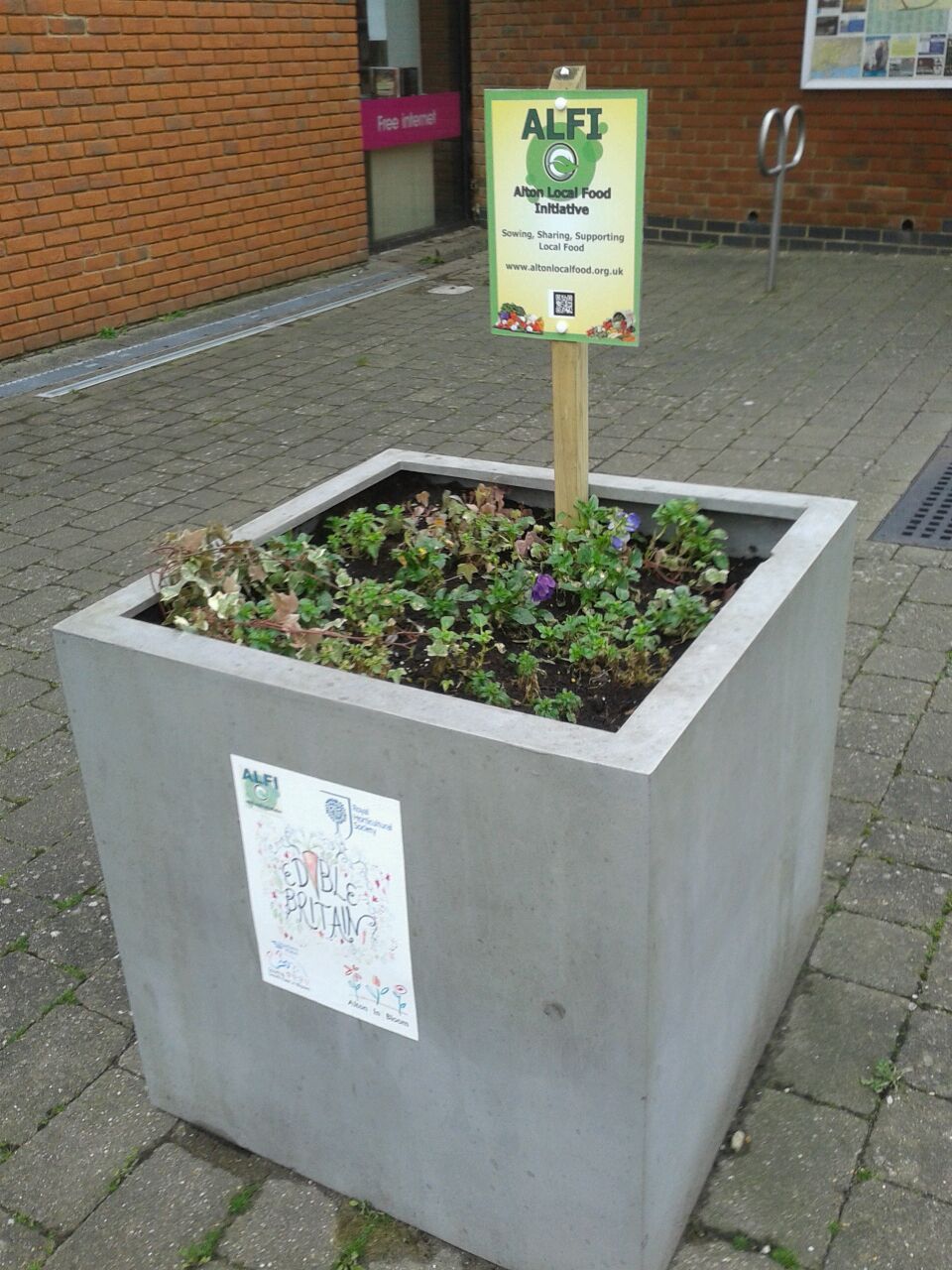 ur planters got shifted around quite a bit due to the council’s new flower arrangements, and ongoing works around the Station, with our rings and hops opposite The Railway pub sadly loosing out to a storage area, but some new ground was gained next to the refurbished building next to the Taxi office, and we gained a brand new planter outside the library.
 Also shifted around a bit was the committee, with long-serving members taking a bit of a breather, or swapping roles, and long-lost members returning to the fold.
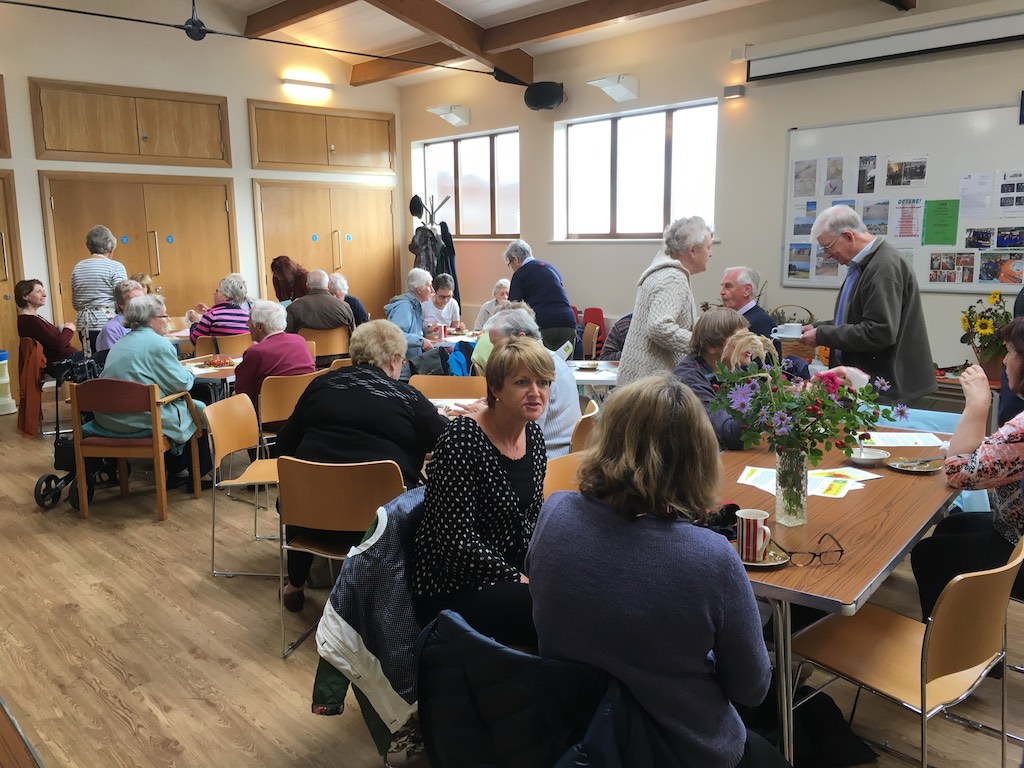 Rounding up the season, our annual Harvest Feast in October was so incredibly popular, we ran out of room, nearly ran out of soup, and chided ourselves for not baking more cakes!

 Alton Local Food Initiative